A roadmap to equitable decarbonization in Massachusetts

The Challenge
Massachusetts has ambitious climate goals, commitment to equity, and a wide range of energy efficiency and decarbonization programs. However, the overlapping and complicated nature of these programs can sometimes make it difficult for residents and businesses to navigate their pathway to decarbonization.
The Solution
The Commonwealth brought in VEIC to analyze options for a more streamlined and coordinated structure for supporting building decarbonization: a “building decarbonization clearinghouse.” Our team conducted research and explored several new administrative structures, including a one-stop-shop model and an enhanced version of the state’s current program structure. Capabilities: Decarbonization Planning
The Impact
With a deep understanding of the current programs, potential options, and benefits and drawbacks of each approach, policymakers in Massachusetts—and similar states watching closely—now have a framework for more efficiently administering equitable, customer-oriented decarbonization programs.
Massachusetts is a leader in decarbonization, consistently ranking among the top states for its strong support of climate action. The Commonwealth doesn’t just check policy boxes—it backs up its bold agenda with substantial funding and programs to help residents and businesses transition to clean energy. Despite this strong support, many residents and businesses struggle to understand and navigate the complicated landscape of offerings. This is especially true in low-income or environmental justice communities. To make its programs more accessible and holistic, the Commonwealth brought in VEIC to evaluate options for a more streamlined approach.
Today's program landscape
Our team began by mapping Massachusetts’ current decarbonization programs and looking at how other states approach similar efforts. As things stand, Mass Save is the largest energy efficiency program in the state, run by nine program administrators and covering towns from the Berkshires to Cape Cod. The program gives residents access to no-cost home energy assessments, weatherization upgrades, heat pump installations, and efficiency measures like smart thermostats. Businesses can also benefit from offers and technical support. Mass Save programs have evolved over the years to aim for reducing greenhouse gas emissions, but many of its governing laws and rules are still oriented around saving kilowatt-hours.
Not everyone is covered by Mass Save. Residents who live outside of Mass Save’s jurisdiction in towns serviced by municipal light plants can access other local offers, but these vary significantly depending on where you live. A dozen state agencies, such as the Department of Energy Resources or the Massachusetts Clean Energy Center, also offer programs.
After analyzing the current Massachusetts landscape, we looked outside the Commonwealth to see if there are any successful models. Though there are no jurisdictions in the U.S. that reflect the scope, scale, and level of program integration that Massachusetts is interested in evaluating though a one-stop-shop “Clearinghouse” model, the Commonwealth isn’t starting from scratch. Our team gleaned several important lessons around accountability, objectives, data, and funding that we folded into our analysis.
Finally, we wanted to understand the experiences of residents, businesses, and program implementers, so we conducted interviews and a customer journey analysis to identify key challenges and opportunities. We consistently heard that it's difficult for customers to navigate and find programs that meet their needs. Another issue that came up was that current program metrics were misaligned with policy priorities. Many equity stakeholders also expressed feeling left behind, especially given the history of being underserved by Mass Save and other incentive programs.
From complexity to clarity
After analyzing the strengths and gaps in the current program landscape, our team moved into the design phase, identifying core objectives behind the hypothetical new “Clearinghouse.” The goals of a new or amended program would be to:
- Reduce the energy burden in low-income households
- Streamline program administration
- Provide equitable access to (and adoption of) decarbonization technology
- Achieve long-term greenhouse gas reduction targets
- Reduce energy costs for non-residential customers
- Minimize demand on the electric grid to avoid new costly infrastructure
With clear goals in mind and key performance indicators to back up each one, VEIC consulted stakeholders to understand how effective program components are in meeting those goals.
An essential piece of this stakeholder engagement phase was putting together and consulting an equity advisory panel, a group of nine members compensated for their help assessing how programs can best serve the communities that members represent. Our team folded in stakeholder and equity advisory committee feedback throughout the process.
Solar can significantly reduce household electricity costs, but communities with the highest proportional energy burden also tend to have some of the lowest rates of solar penetration. To achieve its aggressive energy efficiency goals and increase the accessibility of solar, the District needed to expand solar in precisely those areas where household incomes are lowest. No easy task.
Working with local businesses, community organizations, and government officials, the program team created an approach that overcomes cost barriers to solar and accelerates installations for all income-qualified households, including renters.
Two paths forward
VEIC landed on two distinct program models for Massachusetts to consider and outlined both options in a Clearinghouse Report:
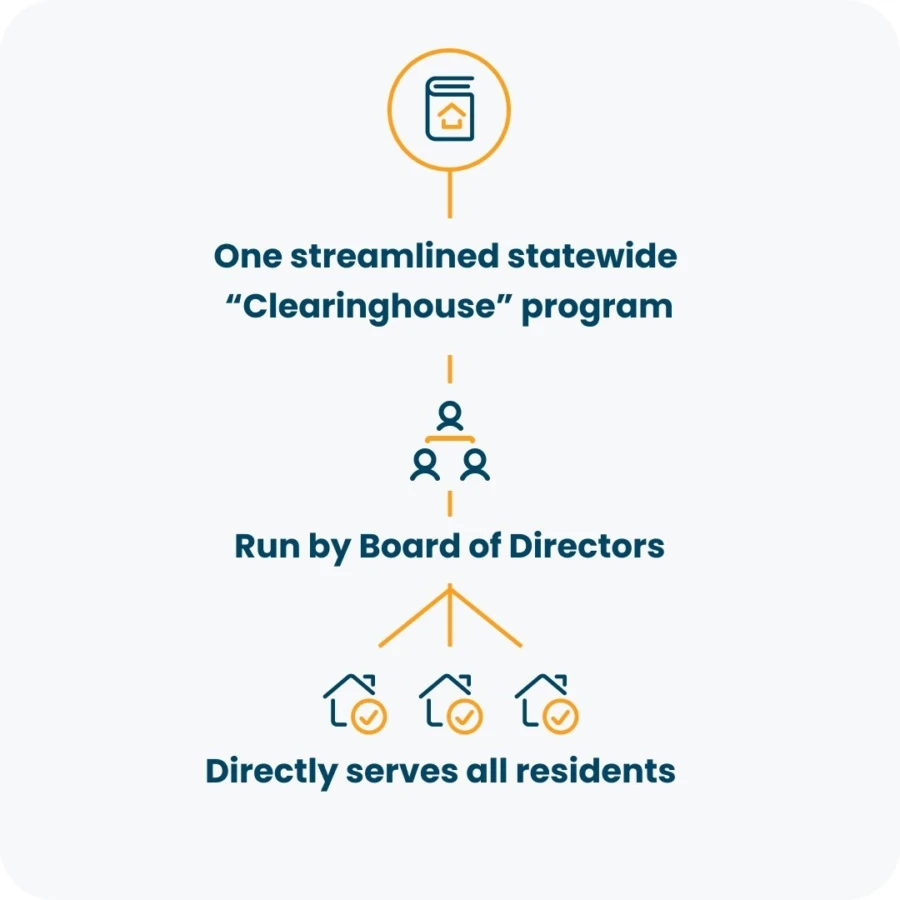
1. A single statewide “Clearinghouse” program: a new statewide administrator governed by a Board of Directors that serves all residents. While Mass Save and MLP administrators raised concerns that this transition may create disruptions, many stakeholders favored the more streamlined approach. VEIC provided transition recommendations to reduce red tape and protect existing services during a rollout.
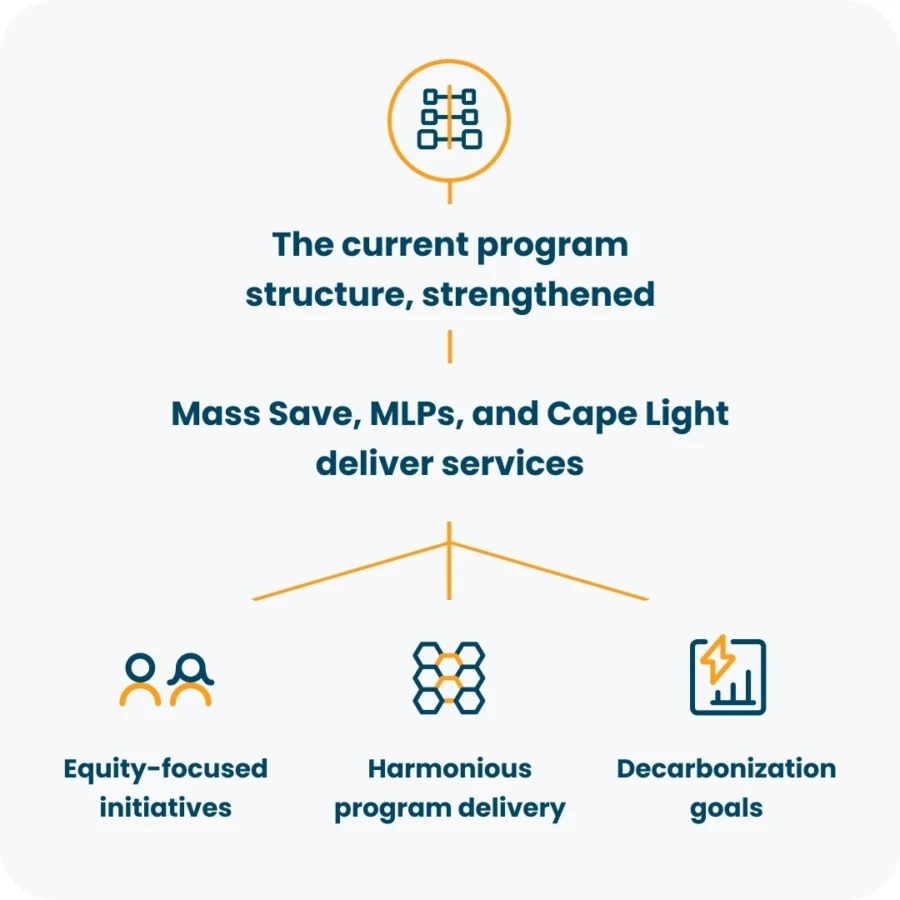
2. Strengthening the current program structure: a reduced number of Mass Save program administrators continue implementing energy programs for their residents with key structural changes. VEIC identified a series of priorities to elevate their programs, including expanding equity-focused initiatives, folding in decarbonization goals, and harmonizing the program delivery across providers.