How EV education is driving Massachusetts’ climate progress

The Challenge
In Massachusetts, transportation is the single largest source of greenhouse gas emissions, accounting for 38% of total emissions. Electric vehicles (EVs) are a proven solution to reduce pollution, and Massachusetts needs to increase its EV adoption rates to keep its clean energy goals on track. To help with the transition, the Massachusetts Legislature identified consumer education as a vital strategy to increase awareness and adoption of EVs among residents, businesses, and dealerships.
The Solution
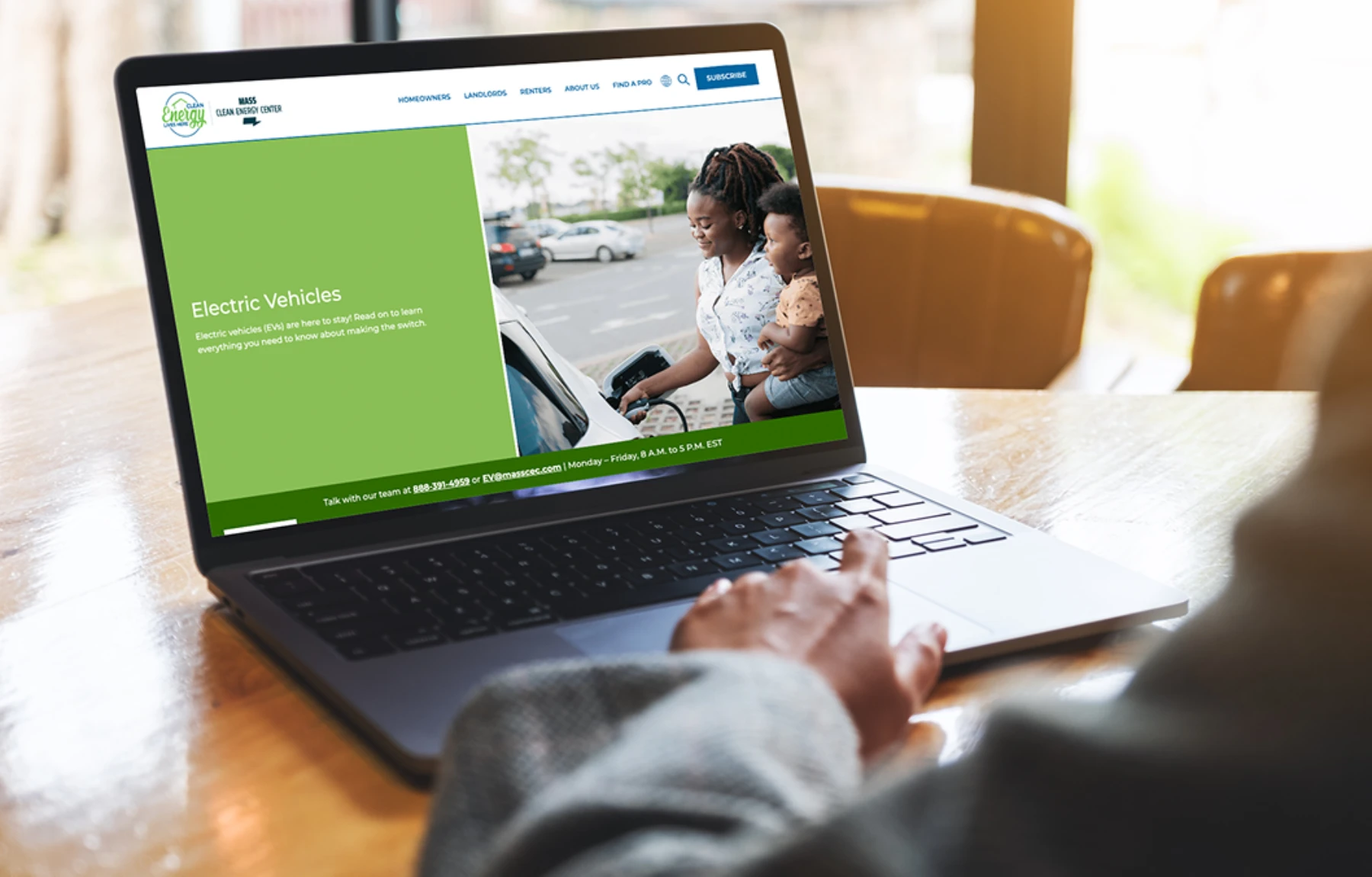
Massachusetts Clean Energy Center (MassCEC) selected VEIC to develop a series of consumer education web pages that explain available EV incentives, clear up common misconceptions, and highlight the far-reaching benefits of driving electric. The pages are tailored to residents, businesses, dealerships, and people living in communities serviced by municipal light plants (MLPs), ensuring every user receives the most up-to-date and accurate EV and charging information. To make sure the pages are as effective and accessible as possible, the web content is available in six languages and was informed by market research reports and focus groups. Capabilities: Fleet Solutions, Marketing & Education
The Impact
Now, the state has a reliable one-stop-shop for all EV consumer education to continue driving EV adoption forward. Since January 2025, 25,044 users have visited the web pages through both organic traffic and paid ads. The commercial- and dealer-focused pages went live in March 2026, and the pages designed for MLP business and residential audiences went live in June 2026. The team will continue promoting the residential pages and kick off marketing campaigns for the commercial, dealer, and MLP pages to increase consumer awareness and help the state march toward its EV goals.
Confronting roadblocks to EV adoption
To help overcome barriers to EV adoption, the Commonwealth identified the critical need for consumer education to increase EV awareness and adoption. While 71% of Americans would consider buying an EV, only 9% say they are very familiar with the basics of EV ownership. Nearly half aren’t aware of any available incentives. This difference between interest and understanding underscores the need for accessible, reliable information. To meet that need, MassCEC decided to create a one-stop shop for EV information, and they brought in VEIC to help.
VEIC’s first step was understanding the barriers preventing Massachusetts residents and businesses from going electric. We developed a market research report outlining the current state of EV ownership, key obstacles, existing resources to help, and content gaps our team needed to fill. This process also ensured we could elevate existing resources instead of duplicating the efforts of other partners and clean energy organizations.
Key barriers included:
- Limited knowledge of EV benefits and mechanics
- Range anxiety around how far EVs can travel
- Higher up-front costs to ownership
- Limited awareness of or access to public charging, an especially important consideration in a state where 40% of housing units are renter-occupied
With these insights, we designed clear web content that’s easy to navigate, inclusive of underrepresented buyers, and focused on addressing real concerns from the state’s diverse population.
We also created a help center so that residents can call or email trained representatives with any questions they have as they view the pages or consider switching to an electric vehicle. The direct line of communication helped build trust in both the content and MassCEC.
Centering underrepresented buyers
A core priority of the project was increasing EV adoption and awareness among underrepresented buyers, including women, people of color, low- and moderate-income households, renters, and young people.
Massachusetts is a diverse state with a high population of multilingual households and renters. To meet community needs, VEIC:
- Translated the web pages into six of the most-spoken languages in MA (Spanish, Portuguese, Mandarin, Cantonese, and Haitian Creole)
- Offered translation in 250+ languages through the help center
- Developed guides on public charging and home charging in multifamily buildings
- Created a guide to buying used EVs
Because affordability is one of the biggest barriers to entry, we placed a particular emphasis on incentives, used EV content, and the lower cost to own and fuel EVs.
Testing, improving, and maintaining content
VEIC used its years of experience running successful EV campaigns—most notably Drive Electric Vermont—to cultivate proven messages and high-value resources on the new web pages. But knowing how quickly the EV landscape changes, we wanted a way to continually evaluate our content.
Before launching the pages, we partnered with Green Path Strategies and local community-based organizations to conduct focus groups in a variety of formats to validate our designs. We asked participants about how easy it was to find information they were interested in, if there was content missing from the page they’d like to learn about, and more. The feedback we heard from residents, businesses, and dealerships helped us not only address community concerns, but also informed our plan to expand resources and topics over the next few years.
To keep up with the shifting EV landscape, our team continuously monitors changes in incentives (including the 50+ offers from local municipal light plants), technology, customer questions, and buying considerations such as rising gas prices. When federal incentives expired, we pivoted quickly to highlight state and utility incentives, as well as lower fuel and maintenance costs.
We also developed an organic content calendar to complement our paid advertising campaigns. This allowed us to create seasonally relevant content that’s helpful to residents and has high Search Engine Optimization (SEO) value, including a winter driving article that addresses apprehension about EV performance in New England weather.
The road ahead
When federal EV tax credits expired, EV sales in Massachusetts (and the nation) began slowing in 2025, but recent sales data show encouraging signs that EV sales will continue to grow. Thanks to MassCEC’s suite of webpages, the Commonwealth is equipped with the educational infrastructure to help maintain this momentum.
As Massachusetts looks ahead, it has a strong foundation for consumer education that provides an essential pathway to increase EV adoption while building trust in both the technology and MassCEC’s economic development work.