Realizing measured decarbonization for every type of property

The Challenge
The Trustees, a nonprofit that stewards 123 properties and more than 364 buildings across Massachusetts, wanted a partner to help them understand the best way to reduce greenhouse gas (GHG) emissions in line with their state’s climate goals. What The Trustees needed was a clear, cost-effective plan to prioritize upgrades across a diverse portfolio of structures.
The Solution
The Trustees partnered with VEIC to develop a strategic roadmap for building energy decarbonization. VEIC evaluated the properties, modeling solutions prioritized by cost, carbon impacts, and available funding. The result: a clear sequence of steps toward lower GHG emissions across The Trustees’ entire portfolio of buildings. Capabilities: Decarbonization Planning
The Impact
VEIC’s roadmap calculated building GHG emissions reductions of nearly one-third overall. While electricity demand is expected to rise, fossil fuel use is anticipated to drop by roughly 50%. The Trustees now have a plan that aligns their climate ambitions with operational realities.
For more than 130 years, The Trustees have preserved the cultural and natural heritage of Massachusetts. Their portfolio includes treasured buildings, such as historic family homes, inns, and barns, as well as visitor centers, museums, and staff housing. In 2023, the organization’s Carbon Transition Report showed energy use in these buildings was generating significant emissions. Over 60% came from heating systems alone. Oil-fired boilers were the primary culprits, despite serving fewer than half of the buildings.
The Trustees understood business as usual would not help them meet ongoing climate commitments—a 50% reduction in emissions by 2030, followed by even deeper cuts through 2050. They needed a path forward. VEIC charted it for them.
Building a roadmap
Developing a clear, actionable roadmap was central to meeting The Trustees’ climate goals. VEIC started by conducting an in-depth analysis of the nonprofit’s building portfolio.
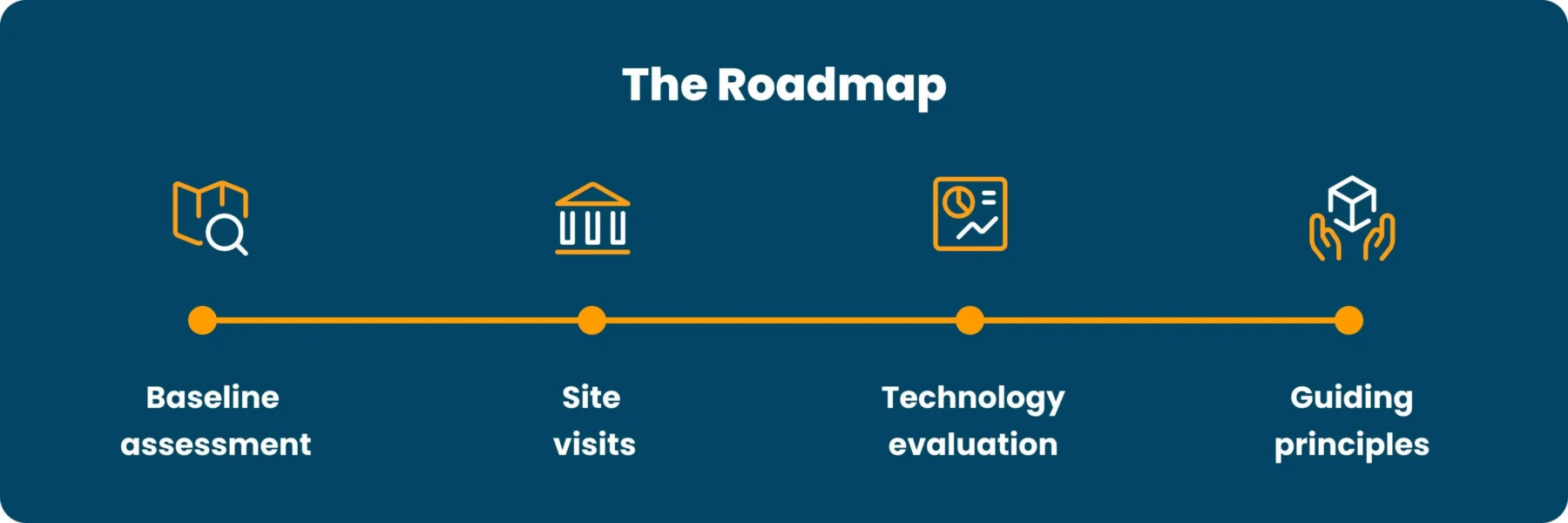
This analysis included:
- Baseline assessment
Data revealed that building operations generated 2,533 metric tons of carbon emissions annually. Heating systems alone were responsible for nearly 60% of that total. Oil-fired boilers, although serving fewer than half of the buildings, accounted for 60% of heating emissions, making them a top priority for replacement.
- Site visits
VEIC conducted assessments at 23 buildings across 11 properties, including museums, farms, and historic houses. These visits identified building types typical of the full portfolio—like staff housing, visitor centers, and inns—that shared common challenges and could benefit from standardized retrofit approaches.
- Technology evaluation
For each building type, VEIC modeled multiple retrofit options, utilizing various heating technologies and systems. The analysis compared these technologies based on their carbon reduction potential, compatibility with existing systems, capital and operating costs, and payback periods.
- Guiding principles
VEIC worked with The Trustees to establish principles that would guide the creation of the roadmap. These included reevaluating building use (to focus on those with the most significant emissions impact), improving envelopes before investing in new systems, aligning retrofits with equipment end-of-life cycles, and maximizing the use of available rebates and incentives.
The result was a framework that translated complex modeling into practical next steps. For example, larger, hydronically heated buildings over 5,000 square feet were identified as ideal candidates for either pellet boilers or ground-source heat pumps, while smaller, ducted buildings were designated for cold-climate, air-source heat pump conversions. Mid-size buildings with existing gas systems were recommended for hybrid or supplemental heat pump strategies to maximize GHG reduction impact without overburdening capital budgets.
This framework also provided a snapshot of technologies that could be deployed, along with a sequence—what to do first, what to defer, and how to bundle projects for the best savings. In this way, The Trustees gained a roadmap that was both technically sound and financially and operationally achievable.
Matching technologies to needs
Across the numerous properties, the following technologies emerged as particularly effective solutions:
- Building consolidation
The most cost-effective decarbonization strategy is to avoid heating a building if possible. Several heated buildings were identified for possible consolidation, which would eliminate the need to heat them.
- Weatherization and envelope improvements
Upgrades like improved insulation and air sealing were identified as cost-effective, foundational steps to explore before system replacement, ensuring efficient equipment sizing.
- Cold-climate air-source heat pumps
Efficient, ducted air-source heat pumps could replace fossil fuel heating in many of the nonprofit’s buildings with furnaces, meeting 100% of the heating demand in smaller structures.
- Hybrid heat pump and gas units
In larger or less efficient buildings with ductwork, air-source heat pumps could offset 70–80% of annual gas use while retaining existing systems for backup on the coldest days.
- Pellet boilers
Advanced wood heating was identified as a strategy for a small number of large historic buildings with high-temperature hydronic distribution, offering compatibility with existing heat distribution equipment and total replacement of heating oil.
- Ground-source heat pumps
Ground-source heat pumps (GSHPs) were identified as another viable solution for several larger buildings with lower-temperature hydronic heating. While GSHPs are significantly more expensive and have longer payback periods, the current availability of strong incentives helps improve the financial viability.
- Photovoltaic systems
Installing solar was identified as an important complementary strategy. While not heating technology, on-site renewable generation reduces reliance on grid electricity, lowers operating costs, and shrinks the carbon footprint over time.
Quantifying the impact
A critical part of VEIC’s work was accomplished through detailed modeling. Testing different retrofit strategies across the Trustee’s varied building portfolio allowed our team to compare them in terms of technical practicality as well as cost, efficiency, and emissions.
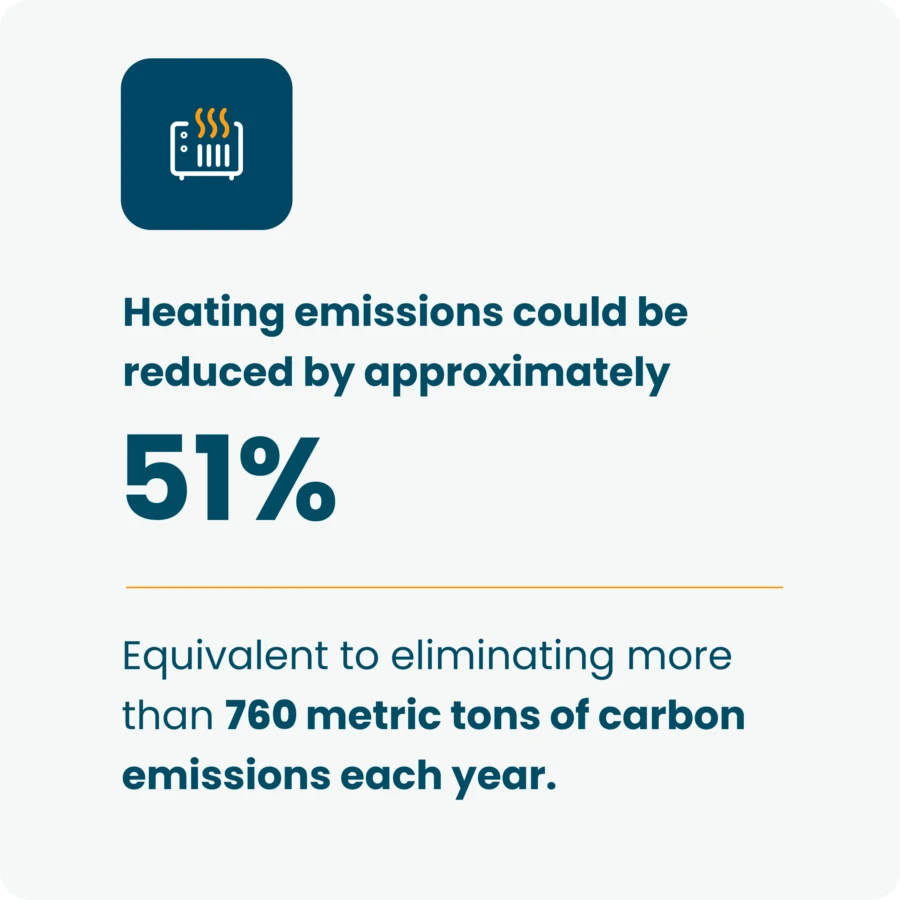
Limited resources and hundreds of buildings necessitated identifying which investments would deliver the greatest benefits first and how the improvements would add up over time. The results were compelling. Heating emissions could be reduced by approximately 51%, equivalent to eliminating more than 760 metric tons of carbon emissions each year. Overall emissions would decline by nearly 30%.
Projections included:
- Fossil fuel use reduced by 49%
- Electricity use increased by 26%
Offset by the above fossil fuel reductions, this expected shift also positions The Trustees to benefit as the regional grid continues to add renewable energy.
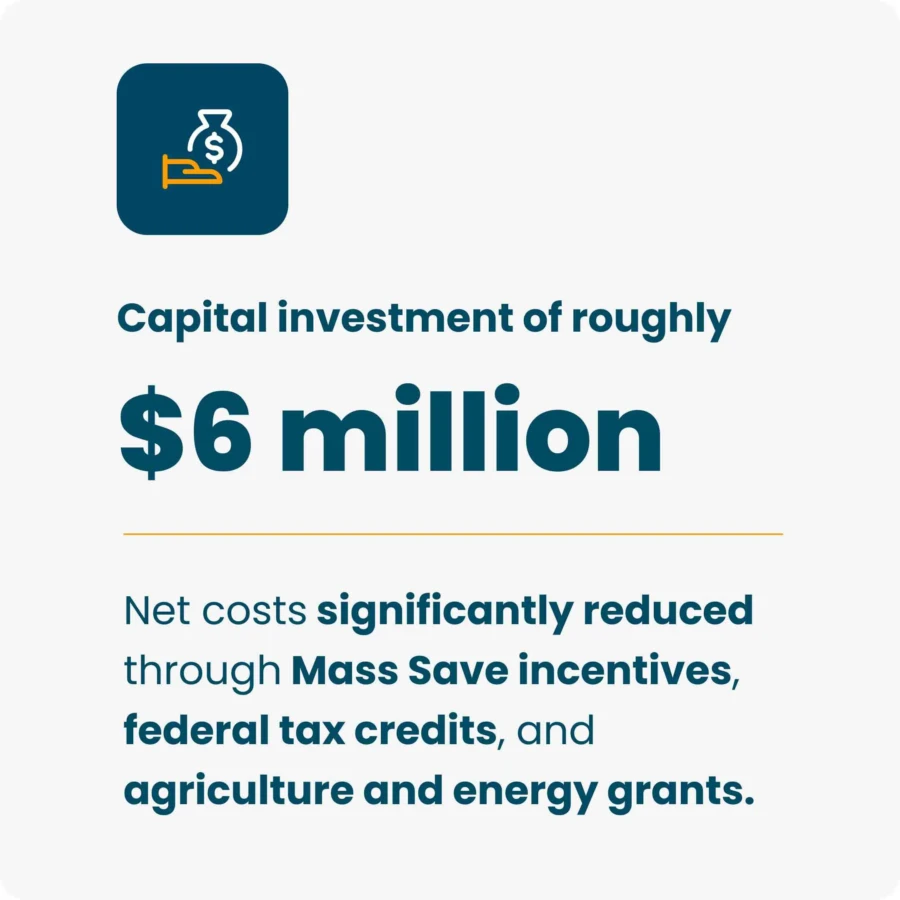
- Capital investment of roughly $6 million
Net costs significantly reduced through Mass Save incentives, federal tax credits, and agriculture and energy grants.
Phased implementation
For The Trustees, while moving forward required identifying the right technologies, it was also important that the work be practical, affordable, and timed to fit within long-term budgetary planning. The roadmap VEIC designed features distinct phases, breaking down challenges into manageable steps. The approach ensures that our client can begin making progress right away, spread investments over time, and align upgrades with financial incentives.
Early phases target oil-heated buildings where emissions reductions are greatest, and financial incentives are strongest. Mid-term phases focus on supplemental systems and efficiency upgrades to shrink loads and improve comfort. Later phases address more complex retrofits, with the flexibility to adjust as new technologies or funding opportunities emerge.
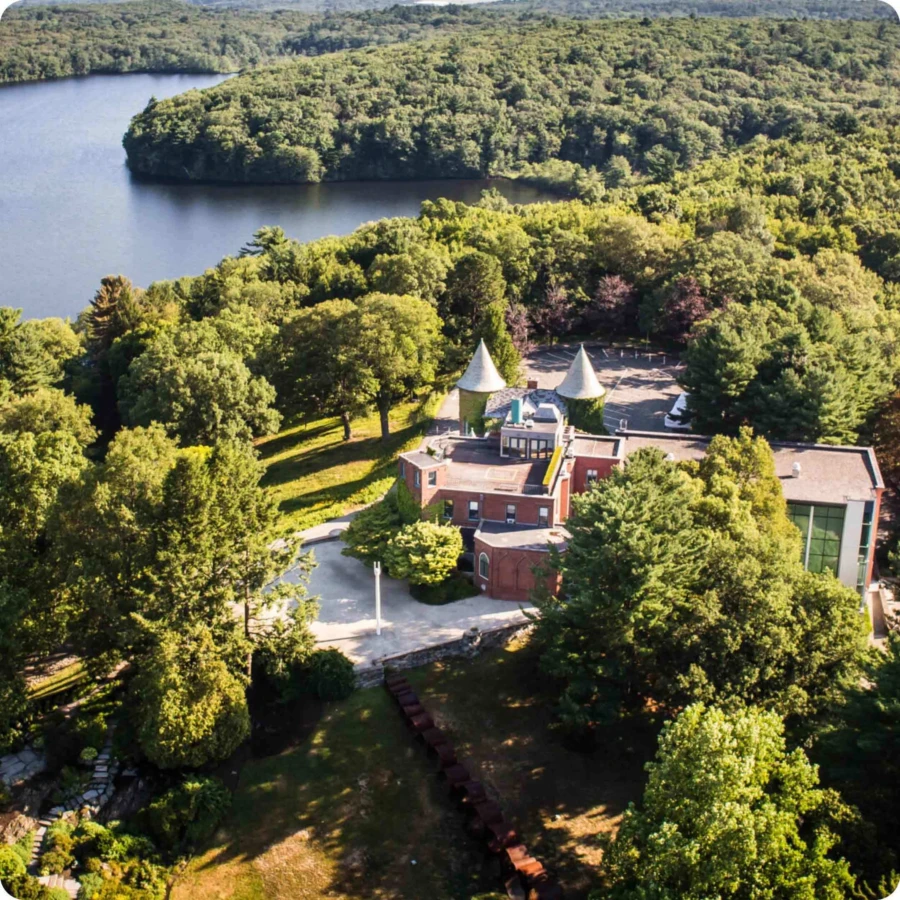
Staff engagement was built into the process, with workshops and quality assurance protocols ensuring that operations teams understand the technologies being installed and their role in achieving climate goals.
Looking ahead
With their roadmap in place, The Trustees are already moving forward—raising capital, securing financing, and beginning installations. A pellet boiler at their Moose Hill Farm property marked one early step, immediately reducing emissions by an estimated 40%.
In addition to on-site measures, The Trustees are also exploring the strategic use of carbon offsets. These serve as a bridge in cases where immediate reductions are not yet possible, helping the organization stay on track with interim climate targets while larger retrofit projects are phased in over time.
The broader effort demonstrates that even a large portfolio can be decarbonized effectively and responsibly. By combining thoughtful modeling with practical, sequenced improvements, VEIC helped The Trustees transform a considerable challenge into a clear plan for progress, positioning them to meet their decarbonization goals.