Bringing affordable clean energy to income-qualified households
The Challenge
Despite the availability of funding, many low- to moderate-income (LMI) households are unable to adopt clean energy solutions because necessary home repairs and equipment upgrades create financial roadblocks.
The Solution
Through creative allocation of federal funding, Efficiency Vermont is expanding programming to overcome the barriers to access that LMI populations face, reaching them with much-needed resources.
The Impact
By weaving multiple streams of funding together to address one specific project type, program administrators can overcome barriers, effectively disperse funds, and reach more customers.
Through their record federal funding, the Inflation Reduction Act (IRA) and American Rescue Plan Act (ARPA) have contributed to new and innovative clean energy programming. Both have been instrumental in driving progress, enabling state energy offices and municipalities to expand clean energy solutions like weatherization and home electrification. These programs deliver vital energy savings while bringing us closer to meeting our clean energy goals. Yet a key challenge remains: not everyone can take advantage of these programs. For low- and moderate-income (LMI) households, particularly, things like cost-prohibitive repairs and equipment often stand between them and the incentivized upgrades that could save them energy and money.
Successful allocation of federal resources requires an approach as creative as it is strategic. State energy offices and those implementing energy initiatives may better serve LMI households by expanding energy programs, thereby unlocking efficiency, reducing energy burdens, and driving equitable access to clean energy technologies. This approach does more than address immediate needs; it builds a foundation for long-term sustainability and resilience in communities that need it most.
Program expansion for equitable access to energy efficiency and savings
The Vermont Department of Public Service appointed Efficiency Vermont—an energy efficiency utility managed by VEIC—to develop and implement policies and programs that advance state energy goals. Among Efficiency Vermont’s initiatives are multiple efforts funded through the American Rescue Plan Act. These ARPA-funded programs help residents improve energy efficiency and reduce energy costs.
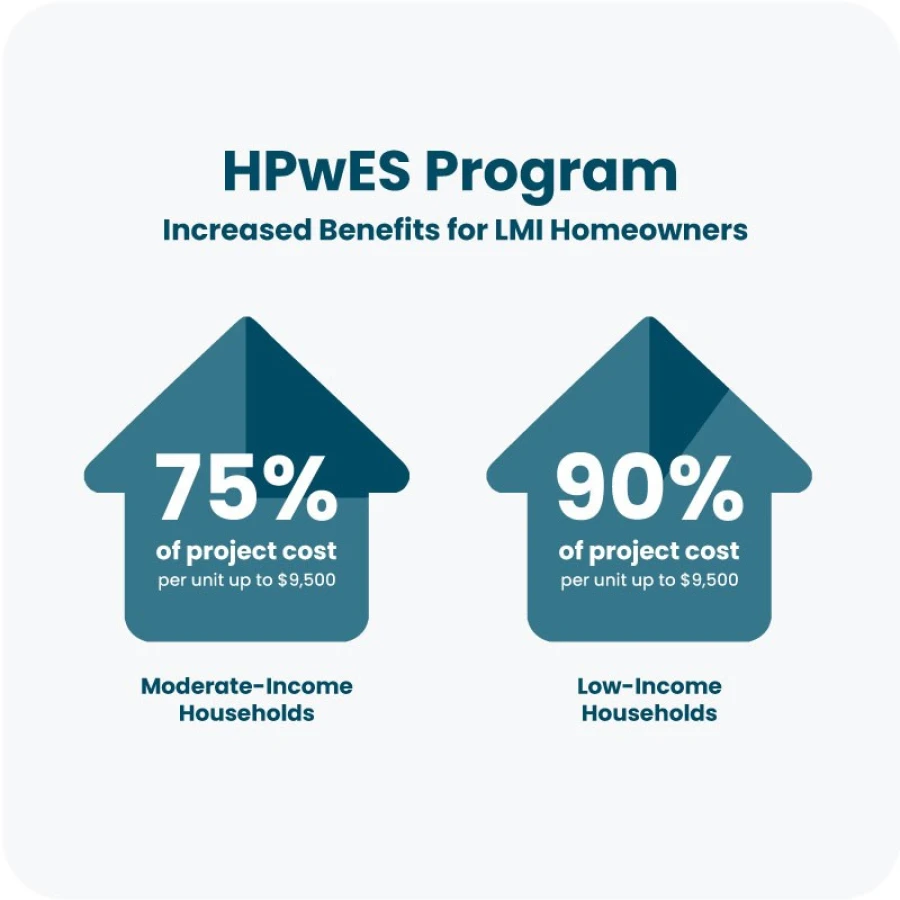
One of these initiatives, the Home Performance with ENERGY STAR® (HPwES) Weatherization Program, is partially funded by a $25M contract allocated through multiple efforts. The primary focus is weatherization, of course. Through the Button Up campaign, Efficiency Vermont encourages single-family homeowners and rental property owners (of 1 to 4 units) to improve their building envelopes through measures such as insulation and air sealing. The rebate structure takes income and rent levels into consideration, with increased ARPA funding for LMI parties. Benefits cover up to 75% of project costs, capping at $9,500 per unit for moderate-income households. Benefits for low-income households cover up to 90% of costs.
These incentives enable state residents to accomplish foundational weatherization improvements that save energy and money while paving the way for greater efficiencies down the road.
However, for many households, a lack of funds isn’t the only barrier. Navigating home projects and associated incentives can be overwhelming. In response, Efficiency Vermont leveraged ARPA funding to offer technical assistance through Virtual Home Energy Visits. These personalized digital sessions are conducted over video chat on a resident’s phone or computer and allow the organization’s consultants to provide customers with detailed assessments, identify areas for improvement, and create tailored next steps. Recommendations can also include health and safety considerations. By providing customers with personalized, objective advice, the organization overcomes the hesitation or avoidance that folks can feel when confronted with potentially costly projects.
Access to repairs for LMI households
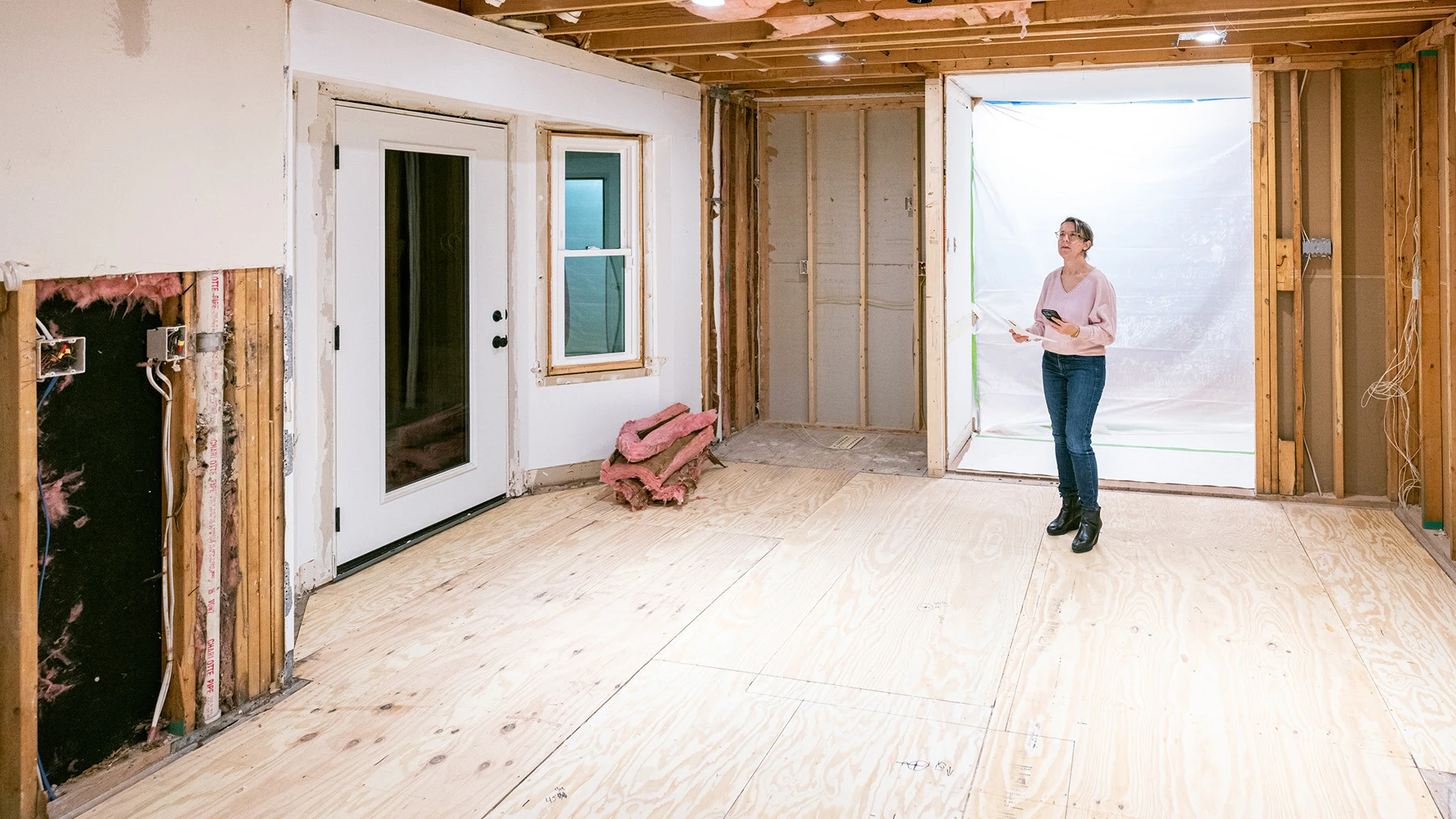
Despite the increase in weatherization program funding and the expansion of technical assistance, some LMI customers still find it difficult to move forward with incentivized projects. Their homes require costly repairs before contractors can begin a weatherization project. In October 2024, Efficiency Vermont expanded programming to include home repair. The added initiative enables residents to address roofing issues and structural concerns – even the remediation of health hazards like asbestos, vermiculite, and mold.
Take, for example, the summers of 2023 and 2024 when Vermont experienced catastrophic flooding across the state. Many homes sustained serious structural damage. This made projects like foundation work, grading, and drainage a top priority. Efficiency Vermont’s expanded programming allowed residents to address the critical repairs that would otherwise stand in the way of projects like incentivized weatherization.
Panel upgrades electrify possibilities
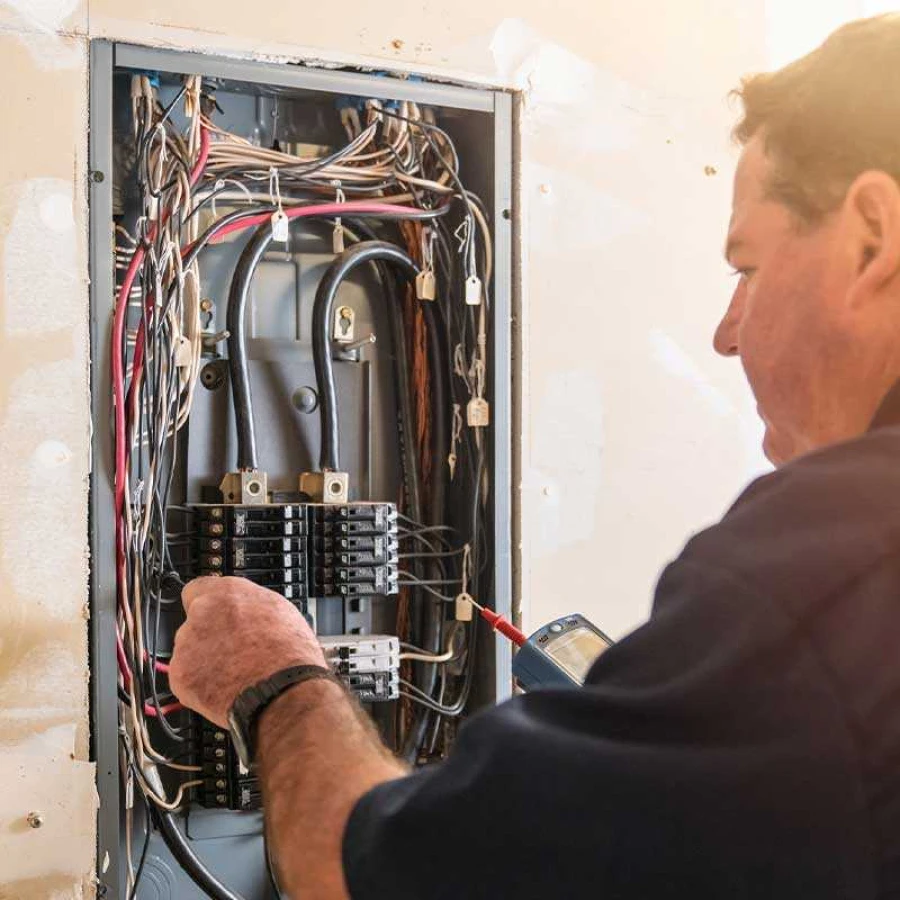
Similarly, prerequisite work can stand in the way of Vermonters seeking to electrify their homes to install heat pump technology or electric vehicle charging. Many need to upgrade their outdated electric panels to 200-amp service, for example. Through Efficiency Vermont’s Home Electric System Upgrade (HESU) Program, households are able to install an appropriate panel. This then allows them to plug into subsequent energy-saving technology.

“A home electric system upgrade is the key to unlocking a more affordable future"
By facilitating access to home electrification, the organization removes a significant barrier. “A home electric system upgrade is the key to unlocking a more affordable future,” said Peter Walke, Managing Director of Efficiency Vermont. Upgrading to a 200-amp panel enables households to switch from fossil-fuel heating to high-efficiency, all-electric heat pumps that provide both heating and cooling in one system. It also supports the transition to heat pump water heaters for energy-efficient hot water. The organization’s program can even provide income-qualified households with an energy-efficient heat pump hot water heater at no cost.
A holistic approach to unlocking potential
Efficiency Vermont’s expanded offerings layer critical repairs and equipment on top of existing traditional programs, demonstrating the power in adapting initiatives to meet customer needs. By ensuring that programs can address common obstacles to energy efficiency improvements, Efficiency Vermont is maximizing both the impact of federal funding and its support of LMI households. This approach sets a new benchmark for creating inclusive pathways to clean energy.