Reducing grocery store costs and emissions with natural refrigerants
The Challenge
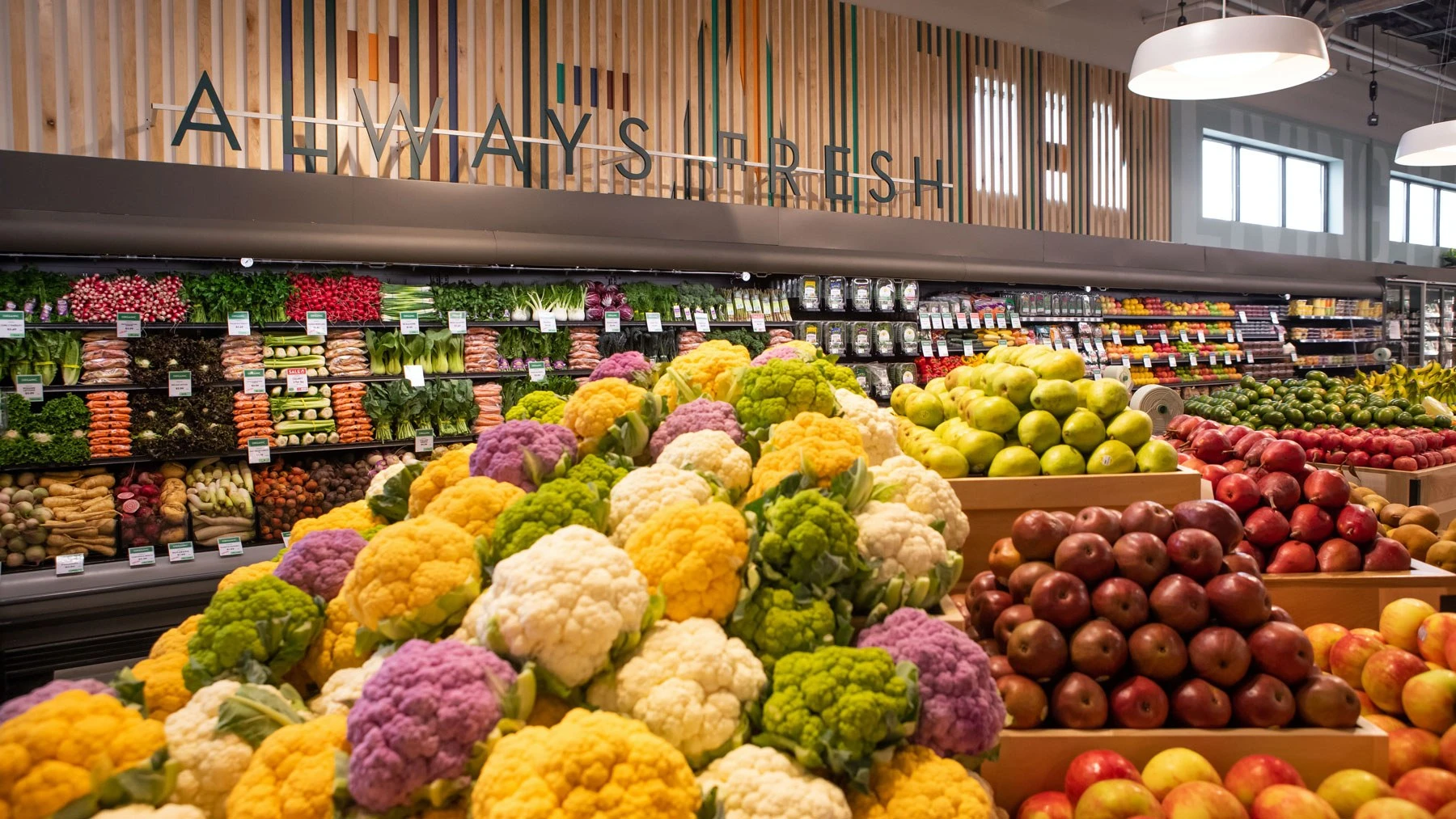
Healthy Living Market & Café is an environmentally conscious organization with stores across the Northeast. While building their newest location, they sought VEIC’s help to transform them from a standard grocery store into a top-tier, energy-efficient, lower-carbon operation.
The Solution
We identified the most impactful areas to incorporate energy efficiency and reduce greenhouse gas emissions in the new store. Refrigeration had the greatest savings potential, so we worked with the project mechanical engineer and equipment provider to design an efficient system using natural refrigerants. Capabilities: Decarbonization Planning
The Impact
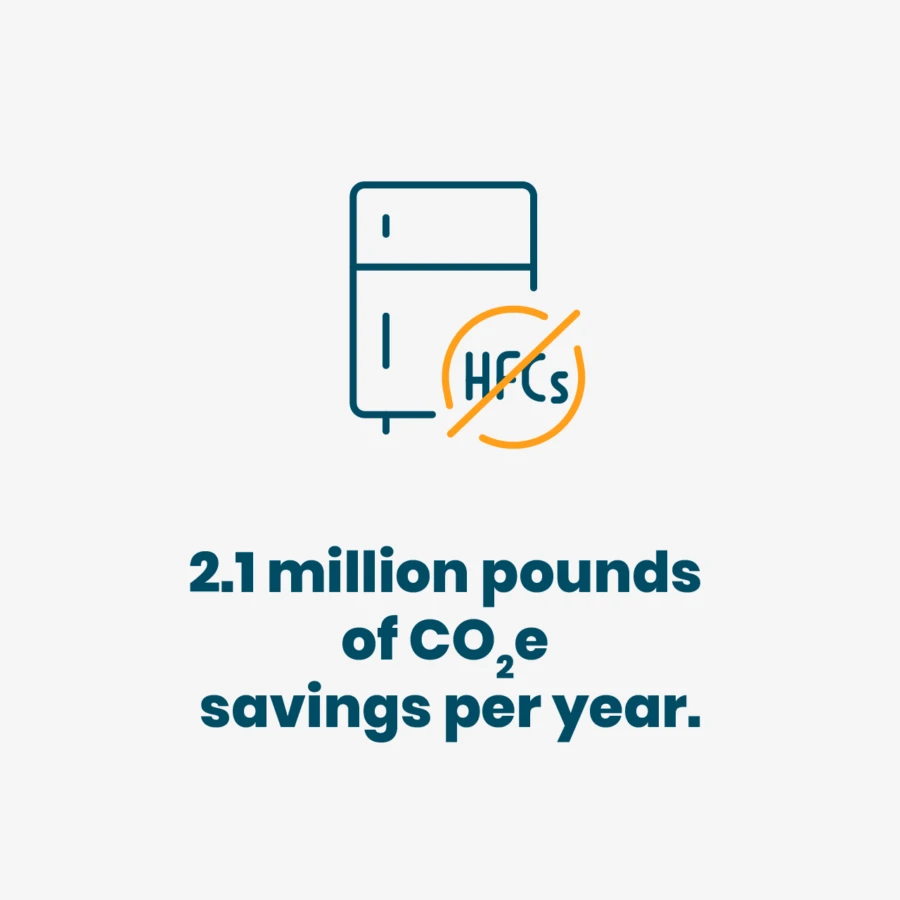
By opting for a CO2 refrigeration system over standard hydrofluorocarbon refrigeration, Healthy Living achieved 2.1 million pounds of CO2e savings per year. On top of that, they saved an additional 555,700 pounds of CO2 per year with energy-efficient equipment throughout the store. These upgrades are expected to save $86,400 per year in electricity costs.
Healthy Living Market & Café (Healthy Living) is a growing grocery operation in the Northeast, with two stores in Vermont and one in New York. As a family-owned business on a mission to fuel a passion for great food, health, and well-being, they value environmental stewardship. From compostable containers to LED lighting in their stores, the market puts its values into practice daily, responding to increased customer demand with renewed dedication to environmental responsibility. So, when the owners decided to build their third location in Williston, Vermont, they set out to minimize their carbon footprint from the start.
Healthy Living selected Efficiency Vermont—administered by VEIC—as a consulting partner for all things energy on their new construction project. Grocery stores are heavily lit, temperature-controlled spaces that are open 12 to 24 hours a day, which means energy-saving opportunities abound. In order to meet Healthy Living’s goals to reduce energy use, minimize their carbon footprint, and stay on budget, VEIC prioritized the areas with the most potential for impact and payback.
Finding effective energy solutions by revealing the hidden greenhouse gases in refrigeration
VEIC has a long history of delivering clean energy services to the grocery industry. In recent years, our energy consultants have begun exploring decarbonization opportunities beyond kWh savings. The fastest-growing greenhouse gases worldwide are hydrofluorocarbons (HFCs)—commonly used in refrigeration systems. These pollutants are more impactful in the short term and are a significant contributor to our rapidly warming world.
HFCs are up to 6,000 times more powerful at trapping heat than CO2 over the next 20 years—the time when emissions need to fall the farthest, the fastest. A typical supermarket refrigeration system can contain several thousand pounds of refrigerant, with roughly 25% of that charge lost annually through leakage. As the North American Sustainable Refrigeration Council states, that adds "up to 70 million metric tons of CO2 equivalent emissions each year just from supermarket refrigeration leaks.” Transitioning grocery stores to alternative refrigerants is a crucial component of addressing the climate crisis.
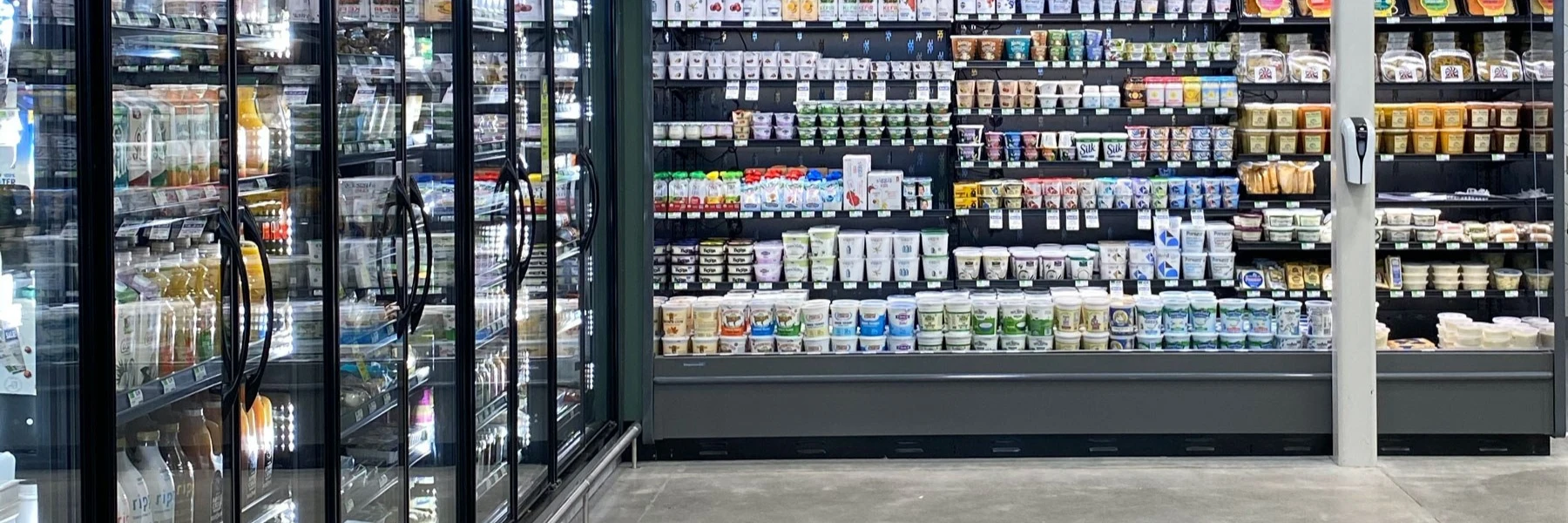
To avert HFC leaks, grocery stores can transition to low Global Warming Potential (GWP) systems—natural refrigerants. CO2 for instance, has a GWP of one, while the GWP of HFCs can be in the thousands. In the case of Healthy Living, swapping the originally planned HFC system for one using a natural refrigerant, CO2, resulted in 2.1 million pounds of CO2e savings per year.
Even with these compelling emissions savings, transitioning to natural refrigerants is not yet standard practice; the process can be complicated. VEIC Energy Consultant Ethan Bellavance was instrumental in bringing the Healthy Living project from concept to reality. Ethan and the VEIC team provided technical expertise to prepare operators and maintenance staff for a new refrigeration system. We also helped to demonstrate the long-term cost savings, making the case for an incremental up-front investment.
“Healthy Living is thrilled by our experience with VEIC. They were able to look at the big picture on the project and then integrate with the build in a collaborative way. The team at VEIC are excellent communicators and hard workers. We will absolutely work with VEIC on all upcoming projects and renovations."
Lowering energy costs while meeting building decarbonization goals
HFCs are used in freezers, refrigerators, air conditioning systems, and some heating systems. These are among the largest energy users for businesses. When a refrigerant upgrade is paired with an efficiency upgrade, the benefits are amplified.
Beyond the natural refrigerant improvement at Healthy Living, we also implemented more efficient design elements, including:
- LED lighting
- High-efficiency, enclosed refrigerator cases
- High-efficiency HVAC systems
- Energy-efficient commercial kitchen equipment
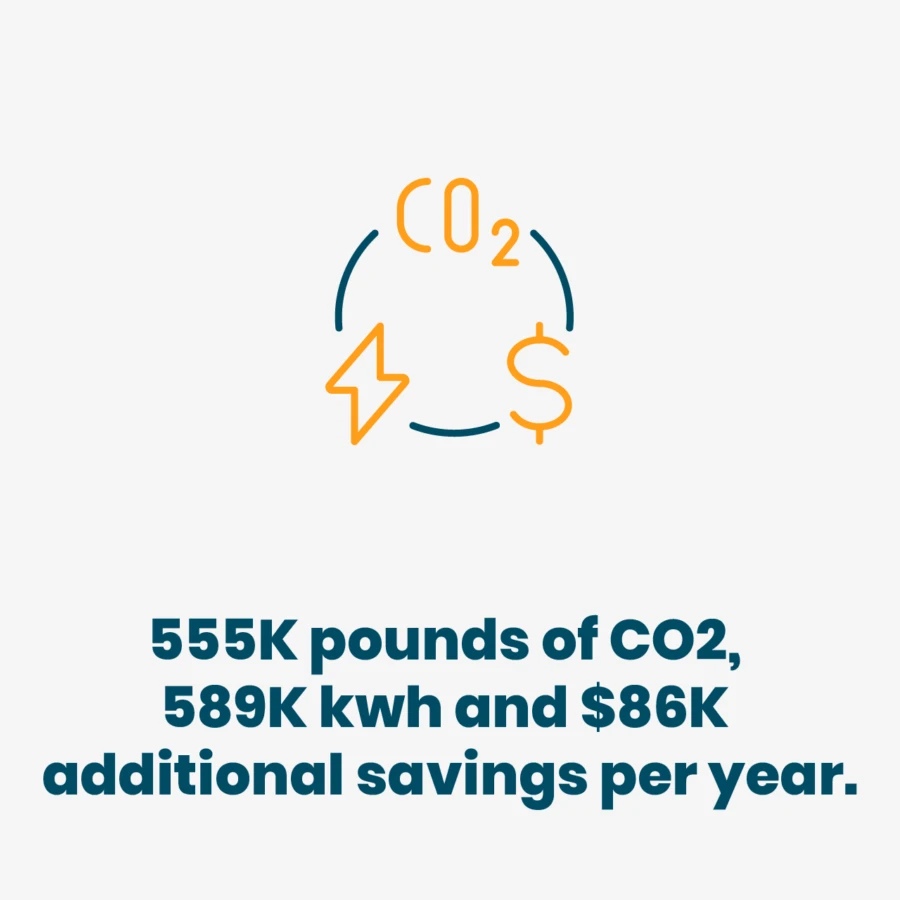
These upgrades and optimizations are projected to save an additional 555,700 pounds of CO2, 589,529 kwh per year, and $86,400 per year. For Healthy Living, that means a three-year total project payback with many years of net benefit to follow.
Sustainable business practices driving climate change mitigation
Healthy Living is one of a growing number of grocery stores taking a hard look at how their business impacts the planet. By investing in innovative refrigeration solutions, they are living their mission and modeling the multifaceted benefits of decarbonization.
The grocery industry at large could scale up the use of natural refrigerants and highly efficient equipment in a coordinated and widespread way. Eliminating HFCs can avoid up to 0.5°C of warming by the end of the century, and improving systems can save millions. Healthy Living demonstrates why supermarkets can’t afford not to implement these energy solutions.