Empowering affordable housing owners to decarbonize their way
The Challenge
The Massachusetts Department of Energy Resources (DOER) offers a grant program to help make energy efficiency and clean energy upgrades to affordable housing, but many property owners weren’t ready to submit high-quality applications for this funding. They needed additional support to understand what upgrades were possible, scope their projects, and navigate the application process.
The Solution
VEIC partnered with DOER to develop the Affordable Housing Decarbonization Technical Assistance program to give property owners a clear on-ramp to the grant funding. VEIC contracted with building science firms to deliver two levels of technical assistance, giving property owners custom and flexible plans to decarbonize.
The Impact
Over 40 property owners received tailored technical assistance to understand what's possible in their buildings. Not only will various grant programs have a stronger, more diverse pipeline of applicants, but even property owners who choose not to apply will walk away with low- and no-cost recommendations to save energy and move their buildings toward decarbonization.
The decarbonization dilemma
For many affordable housing owners, decarbonization feels overwhelming. Many property owners are unsure about the costs, benefits, and where to start. But residents of these properties—who often face the greatest impacts of pollution and climate change—stand to gain the most from healthier homes and more predictable, affordable utility bills.
The Massachusetts Department of Energy Resources (DOER) created the Affordable Housing Decarbonization Grant Program to help fund upgrades that lower energy use and costs in affordable housing, improve living spaces, preserve housing affordability for residents, and cut pollution. The program was designed to help owners of existing multifamily affordable housing make energy efficiency and clean energy upgrades, and it funds projects that include modern heating and cooling systems, better insulation, new roofs, windows, and siding, and on-site energy generation. When the grant program opened, DOER saw the need for a technical assistance program to help affordable housing properties develop a plan to transition to energy-efficient buildings and successfully apply for grants.
To support the market and develop a pipeline of project-ready properties, DOER asked VEIC to design and run an Affordable Housing Decarbonization Technical Assistance program to support property owners in applying for funding opportunities. In 2024, VEIC kicked off program design and created the program to offer a sequence of support that guides property owners from early exploration of decarbonization solutions through to application support.
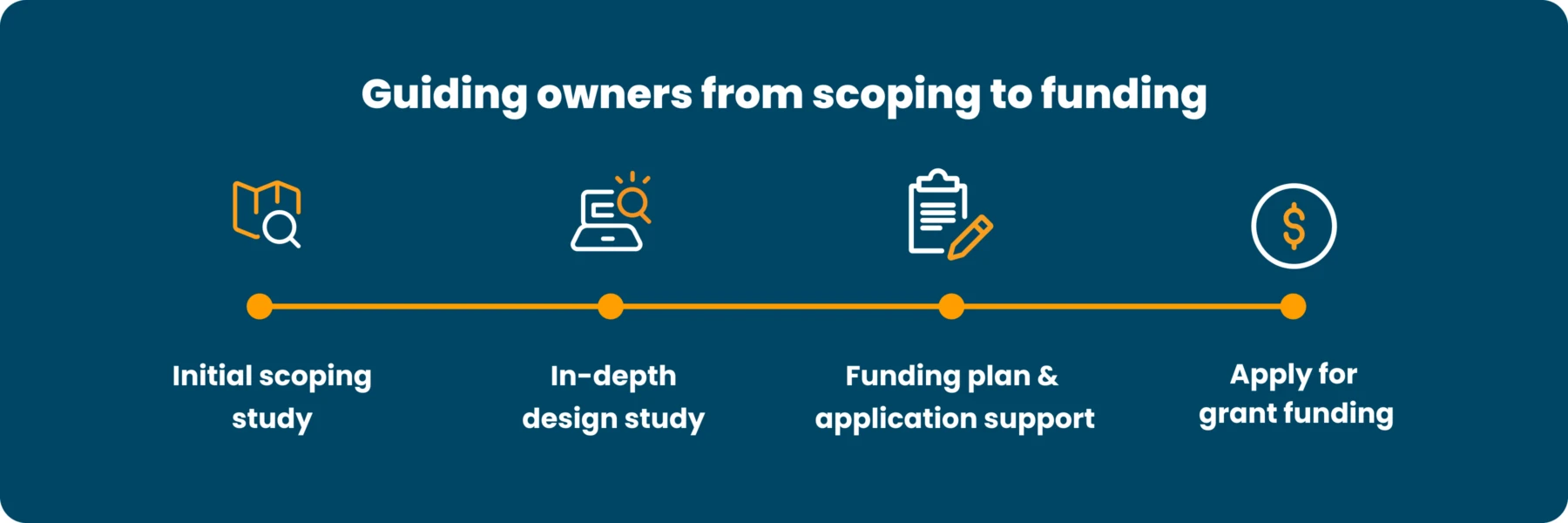
The first stage of the technical assistance program is a scoping study. This low-barrier first step gives property owners a look at their high-level opportunities for decarbonization without disrupting residents. This stage helps owners quickly understand whether they’re good candidates for a deeper analysis of their buildings.
If property owners are interested in learning more, they can move onto an in-depth design study, which provides specific recommendations, cost information, and ideas to sequence updates in the most efficient, cost-effective way. Buildings can choose to focus either on a holistic deep energy retrofit or on creating a gradual path to decarbonize over time.
Once buildings move through both stages, VEIC develops a custom funding plan to help property owners understand an array of funding opportunities that can help make their transition as cost-effective as possible.
Designed for real life: Flexible solutions for real lives
Stakeholder input shaped the technical assistance program from the start. VEIC shared initial design plans with policymakers, affordable housing owners, and community members who helped refine the program to better reflect real-world needs.
Stakeholder input led to major improvements to the technical assistance program design, including streamlining the scoping study. For example, the team made energy modeling requirements more flexible to avoid adding time and cost to the process. Not all buildings were required to undergo full energy modeling to apply for funding, so making this requirement more flexible allowed more buildings to participate. By accelerating the initial study, the team could also engage with more property owners early on and assess if their buildings were good candidates for the full design study.
Another key piece of VEIC's approach was centering the everyday life and priorities of residents of these affordable housing buildings. Decarbonization projects aren't always guaranteed to lower costs for residents, so the program team was thoughtful about how projects will improve the comfort of the homes, reduce the building's carbon footprint, and bring utility costs down—or at least keep them steady.
Growing the pipeline across Massachusetts
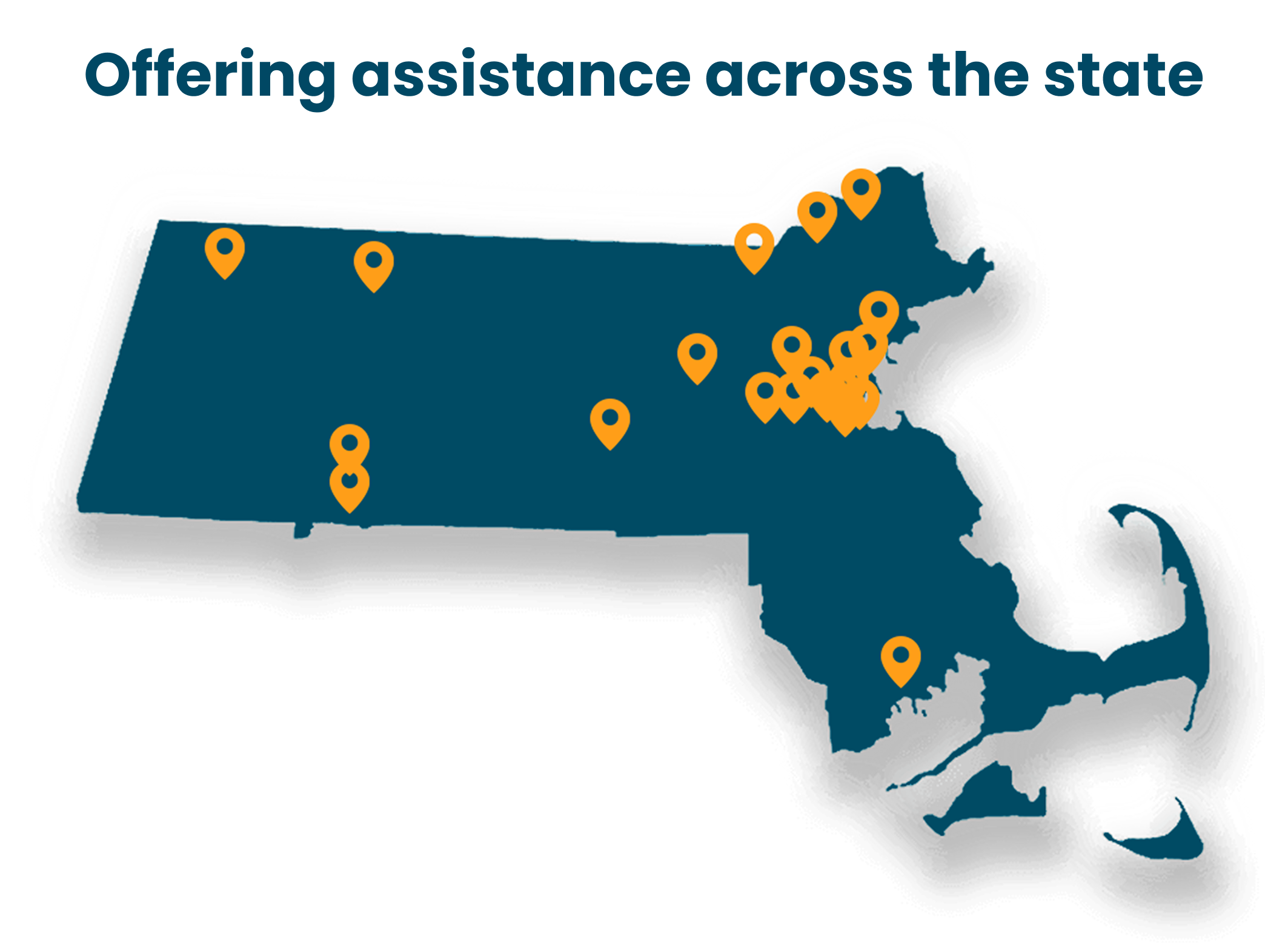
To date, VEIC has facilitated technical assistance to support 44 property owners across the state. Some of the properties the team engaged with are diving all in. For example, Warren Hall in Boston is moving forward with design plans for a deep energy retrofit of their 1870s building, which holds 33 units.
Another 67-unit property, Cusack Terrace in Arlington, is taking a zero-over-time approach, tackling decarbonization projects in an order and timeline that makes sense for them and their residents. Arlington Housing Authority discussed areas where they may be able to expedite work depending on funding, including their hopes to test window heat pumps for residents this winter.
Not every property will move through all stages and apply for available grant funding, but all participants walk away with a better understanding of their building's energy use, a clear plan for decarbonization, and low- and no-cost recommendations that they can implement to save energy.
Regardless of the stage, scope, and approach each project is taking, property owners have consistently reported their excitement to have a partner to lean on for support and to learn what's possible for their properties. Massachusetts policymakers see the program as a model for building a robust pipeline of clean energy projects that meaningfully impact the lives of residents, lower their bills, and improve the air quality and environment for all residents of the Commonwealth.